
I turned off a $1.3m tap and it cost me $80k
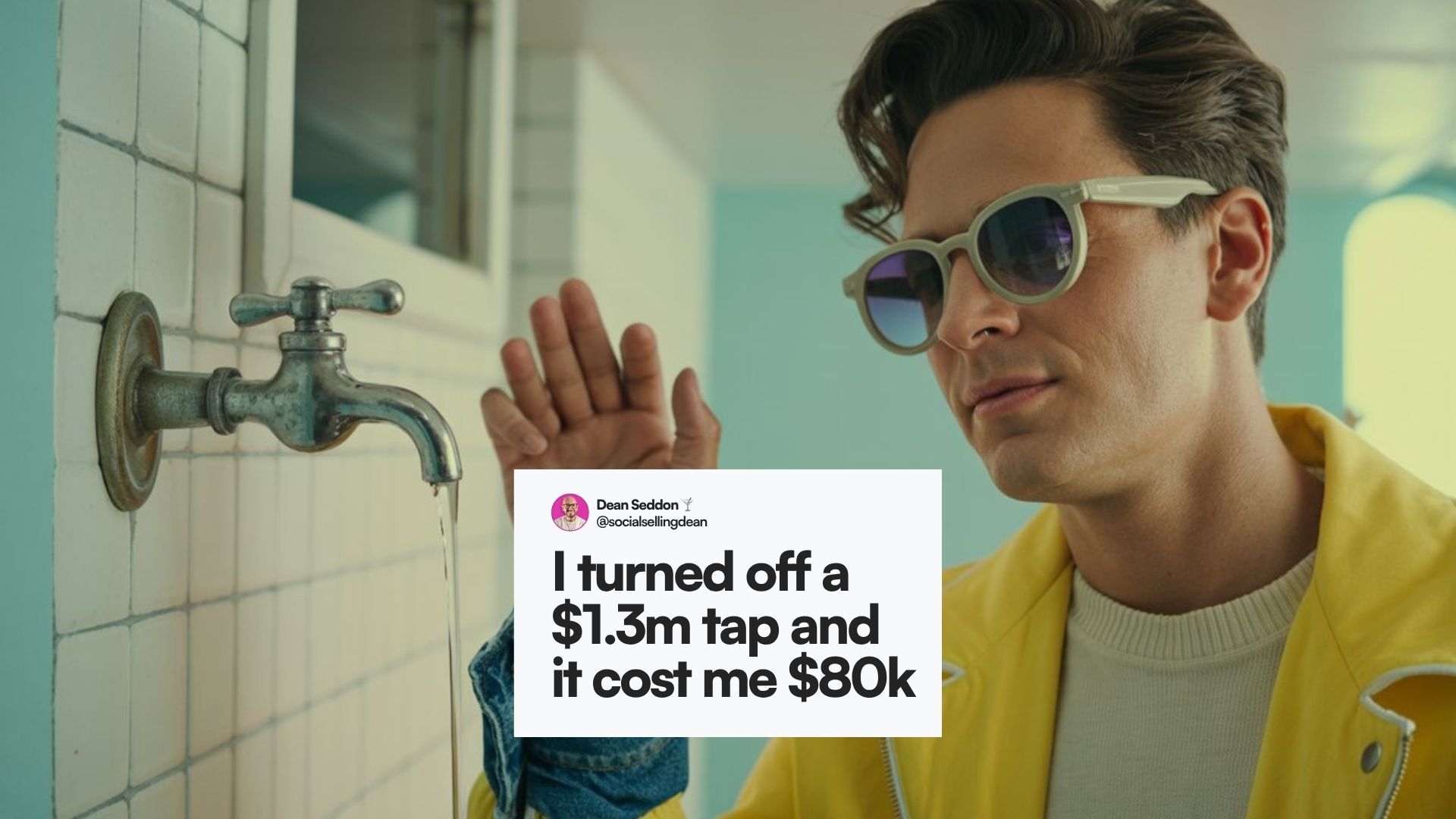
TL;DR: I paused my weekly LinkedIn Lives because the reports said they were barely earning. They were making me $27,000 a week. If you only judge marketing by the last touchpoint, you will eventually do the same thing to your own pipeline.
A few years ago, we paused my weekly LinkedIn Lives.
At the time it didn’t feel like a big deal. They took time to run, the immediate revenue numbers looked unconvincing, and on paper it seemed like a sensible thing to drop.
Then six months later we had a brutal run.
For two months, we lost money. Not small chunks either, $50k one month and $18k the next. We started marketing like crazy to claw it back, and at the same time we started digging into what had gone wrong.
We found it.
70% of our clients had registered for my Lives.
On average they’d registered for two before becoming a client. The thing I’d switched off was the entry point for most of our pipeline. I just couldn’t see it in the reports I was looking at.
I was measuring the wrong thing
Our reporting credited the sale to the last action a client took before buying.
The booked call.
The form fill. The reply to an email.
That’s how most businesses measure their marketing.
It’s tidy, but it’s misleading.
On paper, the Lives looked like they were generating very little revenue. They were the source of most of our leads. When I mapped the full journey from first contact to signed deal, the picture changed completely. They were bringing in $27,000 a week. I’d switched off a $1.3m a year tap.
It took us more than six months to recover from this.
Always Be Marketing
There’s a famous line in Glengarry Glen Ross.
Alec Baldwin walks in and tells a room of beaten-down salespeople to Always Be Closing.
I don’t subscribe to the aggressive sales philosophy in the film, but the phrase stuck with me, and I rewrote it for how I run my business.
Always Be Marketing.
Even when I’m stacked out for months.
Even when I don’t need leads.
Even when the diary looks healthy.
It’s easy to cut back on marketing when you’re busy. It can seem like a smart decision to cut back on “unproductive effort” – but as many marketers will tell you, attribution is very difficult.
Many businesses do this, the focus all their energy on the conversion and cut back on the very thing that fed their pipeline.
When you outreach on LinkedIn, or anywhere, if your name is known, you’ll get a higher reply rate than if you were a stranger.
Someone who already knows me, likes me and trusts me is far easier to win as a client than a stranger.
Someone who recognises my name is more likely to take the call.
You can’t put a clean number on this stuff.
But when you remove it, you feel it hard.
Before you say, “oh but Dean you have 13,000 followers online” – It’s not about followers, it’s about individual people.
Does THAT one person know, like and trust you.
LinkedIn events for me, is a reliable way to create that entry point.
Where this shows up in your business
You probably don’t run weekly Lives. You probably should. They powerful pipeline fillers.
You almost certainly have your own version of what I did.
A consultant who runs a monthly roundtable, decides it isn’t pulling its weight, and drops it. Two quarters later the enquiries dry up, and nobody links the two.
A founder who stops writing the long-form posts because the short ones get more likes and watches the inbound go flat.
A service business that cuts the email list because open rates dipped and never sees that the same list warmed up most of last year’s clients in the background.
A business owner who stops showing up to the events where their best referrers meet them.
The activity feeding the pipeline doesn’t look like it’s feeding the pipeline, because the credit goes to whatever happened last.
We forget, or don’t often track the entry point or the journey, just attribute the last thing that cause them to reach out or decide to buy. We forget all the other things which contributed to that… for me that included the entry point.
Don't let this happen to you.
You don’t need a complicated attribution model. You need to stop deciding what’s working based on the last click. Four things that have protected me since I made the mistake:
- Ask every new client how they first heard of you and write it down. Not the form they filled in. The first time your name turned up in their world.
- Look at the gap between first contact and first sale. For most businesses it’s 60 to 90 days, sometimes longer. Anything you stop today won’t show up as a problem until well after you’ve forgotten you stopped it.
- Treat any activity that builds familiarity as part of your pipeline, not a nice-to-have. Newsletters, events, regular content, podcasts, talks, the lot. They compound in the background and they show up late.
- Keep marketing when the diary is full. That’s the only time you can build calmly. Marketing during a panic is expensive and rarely works.
The point
I killed the thing feeding my pipeline because it didn’t look important yet. I wasn’t lazy and I wasn’t bad at business. I was measuring the wrong thing, at the wrong moment, and trusting the report.
Always Be Marketing isn’t a slogan. It’s what stops you waking up in six months wondering where the money went.
If you want a steady stream of clients next year, the work that gets you there is happening now, in the activity you can least clearly attribute. Don’t switch it off because the report told you to.
Author