
Comment on your prospects posts... but my prospects don't post - what do I do now?
LinkedIn advice: "comment on your prospects posts"
97.4% of the time, that's bad advice, content gurus say it, sales gurus say it - but it's bad advice.
If you follow it, you'll eliminate the majority of the good leads. In the last 30 days here are the stats...
26 million people posted - less than 3% of the platform.
Here is the breakdown...
1m (3.8% of all posts) = people C-Suite leaders.
6m (23% of all posts) = people in entry level roles.
In the UK, = 1m users posted.
In the USA = 4m users posted.
So, if you follow that advice, you limit your prospecting or relationship building to a tiny fraction of the users. The majority of people posting are marketing themselves or they've been told to repost by marketing.
Why would you limit yourself to 2.6% of the platform?
The majority of the users are what we call lurkers, they scroll, they engage and check their DMs.
So you need a different approach than just commenting.
Here are some ideas for you to start using with the prospects that aren't posting...
1. Start discussions in the comments.
Some of your prospects will be commenting on other peoples content. Why not join the conversation?
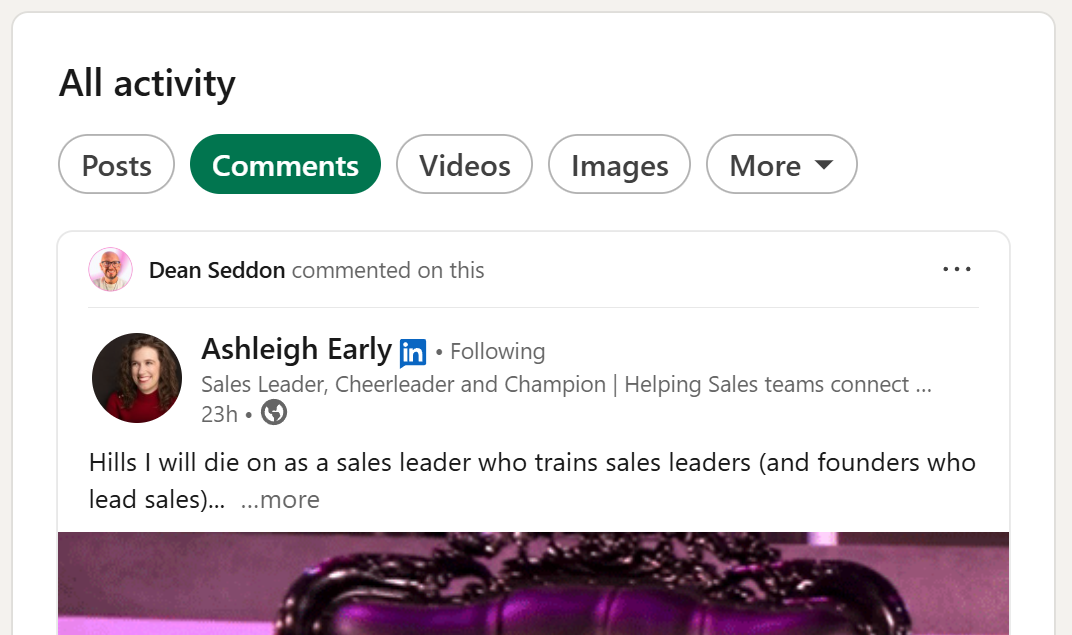
At this point some might say "will this not be a bit weird?" and my answer is, no. You're just joining a conversation and adding the the substance of the comment or the post itself. Sometimes we obsess about things that really don't matter.
Sometimes, when I am walking somewhere if someone is in front of me, I wonder if they think I'm following them. I'm not. We're just heading the same direction. It's not weird to walk down the same street as another person. Likewise, joining in a discussion in comments is normal. It happens everywhere - it just feels weird for you, because you're doing it intentionally.
It works to, sending a connection request or giving further feedback in the DMs after commenting has a huge response rate.
2. The helpful DM.
According to Adam Mosseri, Head of Instagram more content is shared in the DMs than in the feed. Why not share helpful content in the inbox?
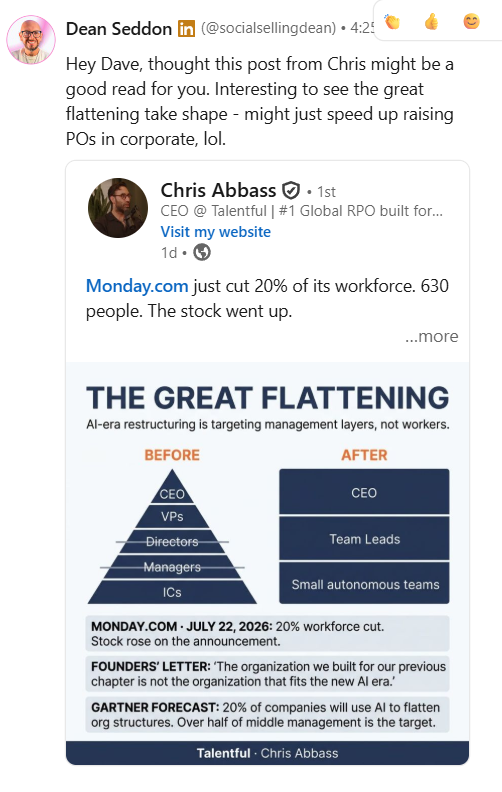
I do this in two ways. I will create specific posts which are non-salesy but incredibly helpful for my ICP and send them in the DMs - the aim is just to be helpful and build trust. The other way I do this is sending other peoples posts to people - again to be generally helpful. My seven steps of social selling process, is clear that you cannot ask anything of someone if you haven't created those touchpoints of trust first.
It's incredibly easy to do, either create a post or find a post and use the SEND feature, on LinkedIn it looks like this...
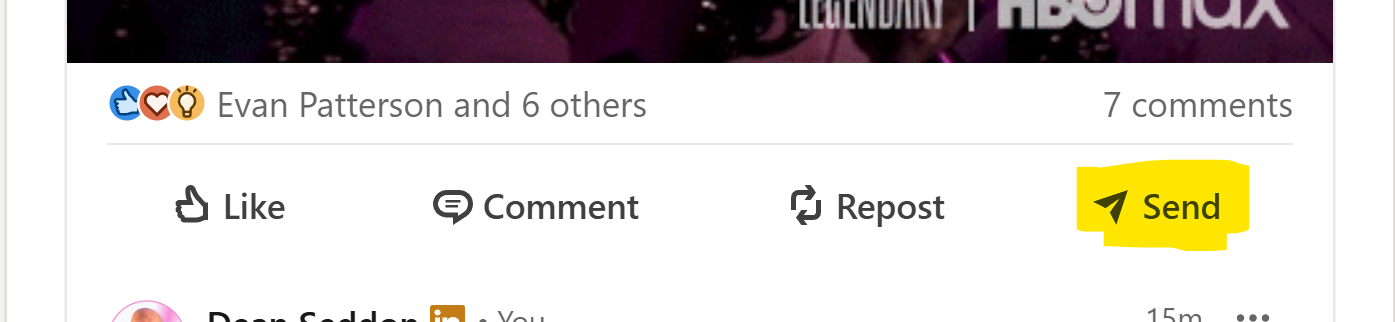
You can send the post to up to 10 people at a time on LinkedIn, but remember to send it separately - the last thing you want is a bunch of prospects all in a group chat together.
Why not send a PDF or link to your website?
Well, real simple, so many people are cautious of clicking links and in some companies their cybersecurity rules mean it blocks them clicking - keeping it inside LinkedIn means the DM has a preview of the content and - they don't have to risk downloading a PDF - which could be a virus, clicking a link which could be malicious or their device blocking the click to your website.
3. The Multi-thread.
One strategy which has worked well for me is multithreading my activity. Moving between LinkedIn and email. The aim again with my seven step approach to social selling is that you earn trust first. Here is what it can look like.
Step 1: Connect on LinkedIn
(wait 2-3 days)
Step 2: Thank you note on LinkedIn
(Wait 5-7 days)
Step 3: Send a whitepaper or insight piece.
(Wait 5-7 days)
Step 4: Send a helpful DM
etc.
4. Newsletter or LinkedIn Article
For the same reason you don't send links, you can send a LinkedIn article.
Just like you'd send a post, except this time it is a well thought-out article about their pain point and goals - It doesn't need to be super tactical. It's actually better if it helps them understand their problem better, rather than give them tips and tricks.
I call this type of article a WHY article - when people understand the WHY behind their problem, the WHY behind the problem persists and WHY it's important to solve it - what becomes possible for them once they solve it.
You can keep it very simple and let them know you're "sharing this with a few [persona] in your network.
In the article you need to include stories and examples of clients you've worked with that you've helped solve the problem. Avoid it being salesly, more storytelling - let them join the dots themselves. Close it off with a low key CTA and a Calendly link.
Quick tip: The title of the article is 80% of your success - focus on your ideal clients and goals - and watch when you talk about the pain points you don't make it feel like your blaming them or making them feel stupid. It's easy to talk to the pain points and make people feel stupid - they'll never reach out for help if you do that.
Keep the tone positive, focused on progress and optimistic.
I'm a big believer in the high value, low volume approach to social selling - as a general rule, if you focus on what matters to your ideal client and you approach it from a point of genuinely wanting to be helpful - you'll succeed.
Let me finish with my own experience.
18 months ago, I wrote an article which showed some challenges sales teams have when it comes to LinkedIn.
I sent that article to 50 prospective clients. As I write this, I am sat on a train heading home from training a senior leadership team of a £1.3billion revenue business - they got the article and read it. They just didn't reply as they were busy and it wasn't relevant right there and then.
So don't write off people who don't post - and don't think that useful content you share in the DMs and Emails didn't achieve anything.
How I help you
I help experts to win clients on LinkedIn without waiting for referrals. I teach people how to leverage social selling to build a predictable pipeline.
I do this through 3 vehicles
- Social Selling Accelerator - A six month implementation programme with 1:1 coaching.
- One Day Strategy - I work with you and your team 1:1 at your offices.
- Public classes - I host public workshops across the US and UK
No paid ads. No pushy tactics. No posting every day.
Most of my clients launch within 30 days (depending on your bandwidth) and start seeing leads in the first 60.
If you'd like to know more schedule a call here.
Who is Dean?
If you're new here, I'm Dean Seddon a global social selling expert, founder of Maverrik, and a 15-year practitioner who has trained over 25,000 salespeople and business owners. If you enjoyed this content, please follow and subscribe to see more.
Author